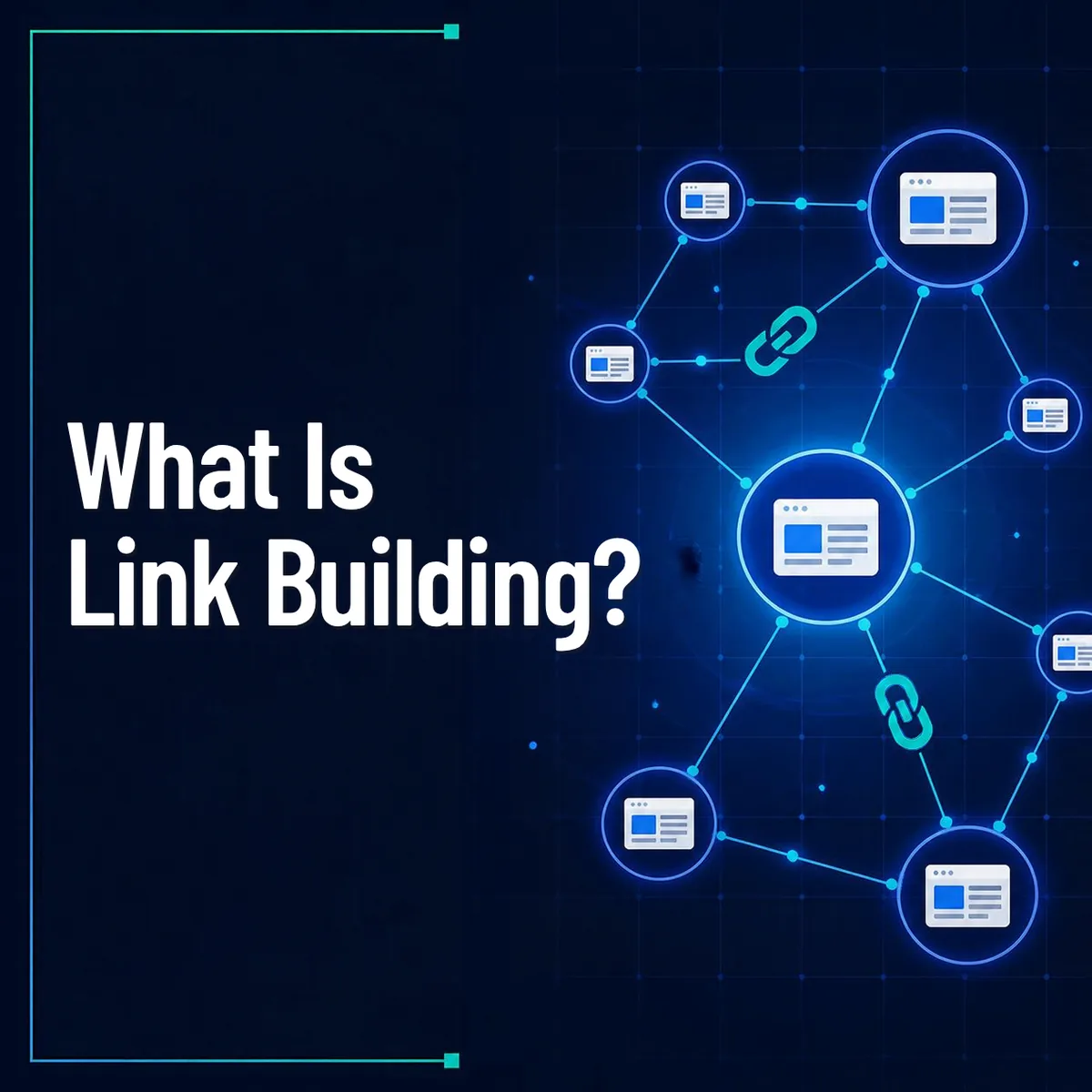
Link building is the process of getting other websites to link to yours. Search engines treat those links as votes of confidence, so a page with good links from relevant, trusted sites usually has a better chance of ranking than an identical page with none.
- Links from relevant, trusted sites act as votes of confidence that help pages rank.
- Quality and relevance matter far more than the number of links.
- Earned links beat bought ones, and link schemes can trigger penalties.
- Fix content and technical basics first, then add link building.
Why links matter in SEO
Search engines were built around the idea that a page worth linking to is probably worth reading. Links are still one of the signals Google uses to judge how credible and relevant a page is, alongside content quality, technical health and how well the page matches what people are searching for.
That does not mean more links always means better rankings. One link from a respected industry publication can be worth more than hundreds from irrelevant directories. Relevance and trust matter far more than volume.
What good link building looks like
Good link building earns links from real websites that a real person would visit. The most reliable methods are:
- Publishing genuinely useful content, data or tools that other sites want to reference.
- Digital PR: pitching stories, research or expert comment to journalists and publications.
- Industry and local partnerships, such as suppliers, associations, sponsorships and community groups.
- Guest contributions on relevant sites where you add real expertise, not filler.
- Reclaiming links: finding unlinked brand mentions and broken links that point to you.
What to avoid
Google's spam policies treat buying links to manipulate rankings, link exchanges at scale and automated link networks as link spam. Sites caught doing it can lose rankings or receive a manual action, and cleaning that up is slow and costly.
Be wary of any service that promises a fixed number of links in a fixed time, guarantees rankings, will not tell you which sites the links come from, or sells very cheap packages built on private blog networks. If a link only exists to rank, it is a risk.
How to tell if a link is worth having
Before chasing any link, ask four questions:
- Is the site relevant to your industry or location?
- Does it have real traffic, real content and a real audience?
- Would the link make sense if search engines did not exist?
- Is the link placed naturally in useful content, not in a footer or a list of paid links?
Is link building right for your business?
If your site already has solid content and technical foundations but struggles to outrank competitors with stronger link profiles, link building can be the missing piece. If your site has technical problems or thin content, fix those first, because links cannot rescue a page that does not deserve to rank.
A good provider will audit your current links, compare you with the sites ranking above you, and explain exactly which kinds of links are realistic for your market before they build anything.

Synergy Digital Hub
Two in-house marketing partners based in Melbourne, with 25+ years of combined experience and 1,000+ businesses served across Australia. We publish practical, plain-English guidance on SEO, paid ads, social media and websites. Meet us