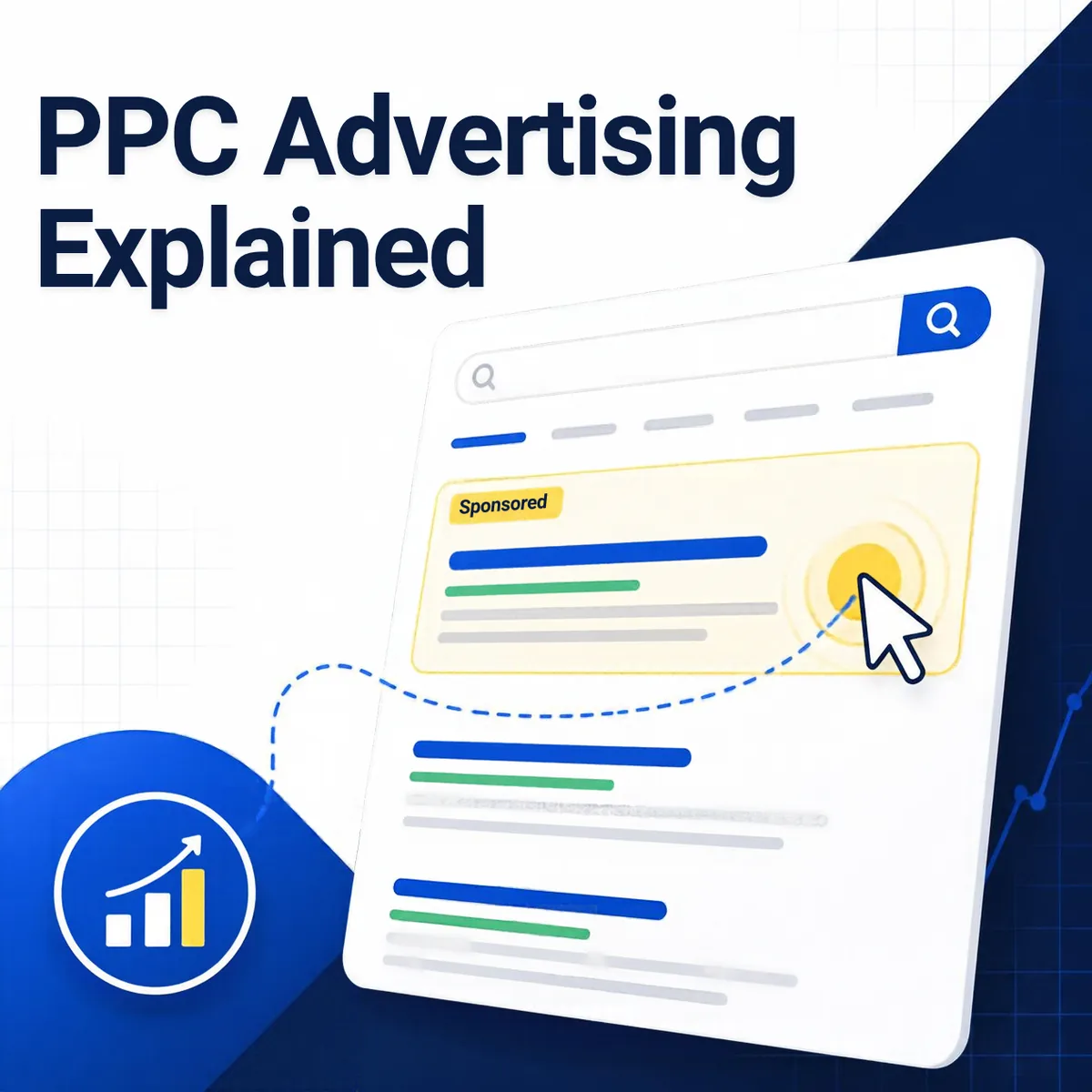
Pay-per-click (PPC) advertising means you pay each time someone clicks your ad, instead of paying for impressions. Done well, it delivers measurable enquiries and sales quickly. Done poorly, it spends budget on clicks that never turn into customers.
- PPC means you pay each time someone clicks your ad.
- Costs depend on competition, ad and landing page quality, and your budget.
- Profit comes from the whole chain: keywords, ads, landing page and tracking.
- Review search terms regularly to stop wasted spend.
How PPC works
On search platforms like Google Ads and Microsoft Advertising, advertisers bid on keywords. When someone searches, the platform runs an auction that considers your bid, the quality of your ad and landing page, and the expected impact of your ad. The winning ads appear, and you pay only if someone clicks.
What affects the cost of PPC
There are two separate costs: ad spend and management. Ad spend depends on:
- Competition: popular, high-value keywords cost more per click.
- Quality: relevant ads and landing pages can lower what you pay.
- Location and audience: targeting affects how many people compete for the same clicks.
- Your budget: you control it, and you can start small and grow.
Choosing a platform
Google Ads suits people actively searching for what you sell. Microsoft Advertising adds extra search reach. Paid social on Meta, LinkedIn or TikTok suits building demand and reaching defined audiences. Most businesses start with Google Ads search and add others as results justify.
What makes PPC profitable
Profit comes from the full chain: the right keywords, ads that attract qualified clicks, a landing page that converts, and accurate conversion tracking so you know which clicks led to leads or sales. Work out your target cost per lead before you start, based on what a customer is worth.
Common PPC mistakes
Sending traffic to a homepage instead of a focused landing page, using broad keywords without negative keywords, tracking the wrong actions, and reporting clicks instead of leads are the most common. Regular search term reviews and clear reporting prevent most wasted spend.

Synergy Digital Hub
Two in-house marketing partners based in Melbourne, with 25+ years of combined experience and 1,000+ businesses served across Australia. We publish practical, plain-English guidance on SEO, paid ads, social media and websites. Meet us